Singapore’s War on Drugs: Effective or Inhumane?
Is there room for more compassion?
Foreword
35 countries and territories retain the death penalty for drug offences, with only eight, including Singapore being categorised as ‘high application’ states for carrying out executions for drug offences regularly.
What does the law say?
Under Schedule 2 of the Misuse of Drugs Act (MDA), a mandatory death penalty will be imposed on any person importing or exporting more than the specific quantities of drugs listed in the same schedule.
However, with effect from 1 January 2013, convicted drug traffickers may be able to rely on s33(B) of the MDA to avoid the mandatory death penalty. They would need to prove either:
1. That they were ‘nothing more than a courier’ and
2. Either be certified by the Public Prosecutor as having substantively assisted the Central Narcotics Bureau (“CNB”) in disrupting drug trafficking activities within or outside Singapore (the “Substantive Assistance limb”) OR
3. He/she was suffering from such abnormality of mind as substantially impaired his mental responsibility for committing the offence (the “Diminished Responsibility limb”).
The biggest problem with existing legislature is contained under s17 of the MDA. If the quantity of drugs proved to be in your possession exceeds a certain amount, you are automatically presumed to possess the drugs for the purposes of trafficking.
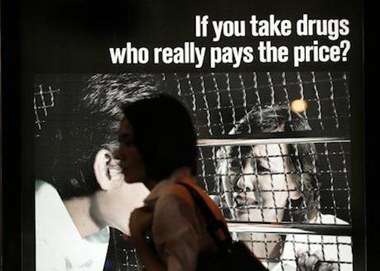
Is the law fair?
The presumption contained in s17 flips the traditional burden of proof away from the prosecution and onto the defendant to prove that he/she did not intend to traffic. Whereas ordinarily, it is for the prosecution to prove the offence beyond a reasonable doubt. The reversal of the burden of proof especially for an offence that warrants a death penalty ought to sit uncomfortably with Singaporeans.
This was amplified by the ratio in Iwuchukwu Amara Tochi and Another v Public Prosecutor [2006] SGCA 10 where even though the high court had ruled that ‘there was no direct evidence that Iwuchukwu Amara Tochi knew the capsules contained heroin’, he was still sentenced to the death penalty as ‘ignorance did not exculpate him’. The Court of Appeal reasoned that ‘under Singapore law such knowledge is presumed until the defendant rebuts that presumption “on a balance of probabilities” and not merely by raising reasonable doubt.’ This prompted furore in the international community with Philip Alston, UN Special Rapporteur on extrajudicial, summary or arbitrary executions claiming that ‘It is a fundamental human right to be presumed innocent until proven guilty’ and that ‘Singapore cannot reverse the burden and require a defendant to prove beyond a reasonable doubt that he didn’t know that he was carrying drugs.’
Further, it ignores the reality that it is common for drug consumers and addicts to purchase a large quantity of drugs either because they are cheaper to buy in bulk or due to an irrational compulsion to feed their addiction. It seems draconian to presume that merely ‘possessing more’ drugs automatically create an intention to traffic and blurs the line between an addict in need of help and a trafficker with nefarious intentions.
Should Singapore move towards harm reduction policies instead?
So why punish kill traffickers?
Surely there are alternatives? Not according to the Singapore Government, who makes three main points to support their claim that the death penalty is necessary:
1. The seriousness of the offence - in terms of the harm that the offence will cause to the victim and to society
2. The frequency or how widespread the offence is
3. Deterrence
Why should we not kill?
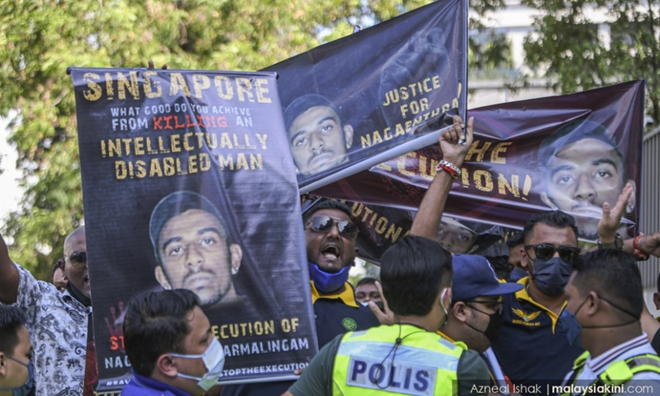
These reasons are problematic, let me tell you why!
1. The premise is that drug trafficking causes immense harm to drug abusers, families and the community. It hyperbolises that the capital sentence threshold amount of 15 grammes of pure heroin (diamorphine) is equivalent to 1,250 straws of heroin, which can feed the addiction of 180 drug abusers for a week.
This argument is non sequitur because let us imagine the following hypothetical scenario - a pub sells x amount of alcohol per day that can similarly feed into the addiction of alcoholic(s) who could potentially go on to commit crimes like domestic violence. In that context, who would you blame? Probably the alcoholic and not the pub because there is a recognition that the offender was a fully rational actor who exercised his own agency in choosing to drink.
In parallel to other crimes that warrant the death penalty such as murder, these are all crimes which are done onto someone else without their consent i.e., a victim is present. Beyond the fact that trafficking is in principle a non-violent crime, I would also argue that it a victim-less crime. Is it then not ironic that heinous non-consensual crimes like culpable homicide and sexual offences do not warrant the death penalty but selling or distributing drugs to consenting adults who opted in of their own volition somehow warrants the death penalty?
2. There is insufficient explanation on this point by parliament but it is likely that this refers to other offences and not so much drug trafficking since first time traffickers are also hung.
3. Firstly, it is unclear if the statistics furnished that showed a general decline of drug offences was purely down to the death penalty since it could also similarly be attributed to a myriad of factors not least the fact that more people in Singapore are now educated and by extension have meaningful employment. Studies by HRI and Oxford professors have also questioned and refuted the efficacy of the death penalty in actual deterring drug trafficking.
Even if some deterrent effect can be proven, it needs to be asked who we are deterring? Are we executing the intellectually-disabled? Are we executing small time mules who are themselves victims of circumstances?
Does deterrence not need to be weighed against notions of proportionality?
Singapore’s War on Drugs is inhumane and it's time for Singaporeans to push for legislative reforms!
We can do better!